
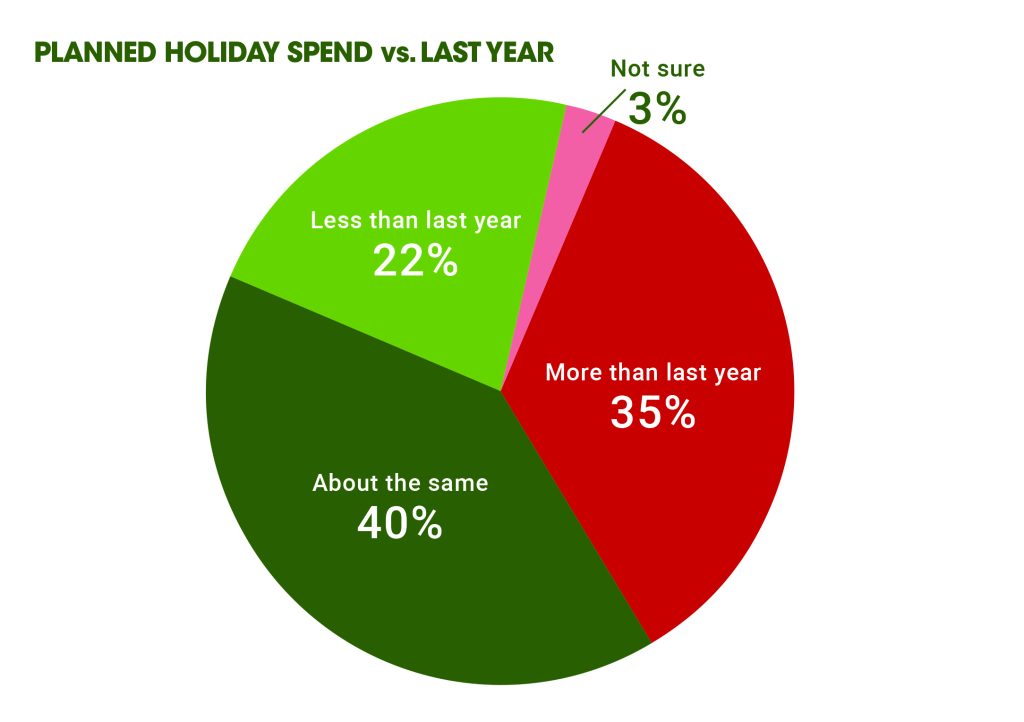
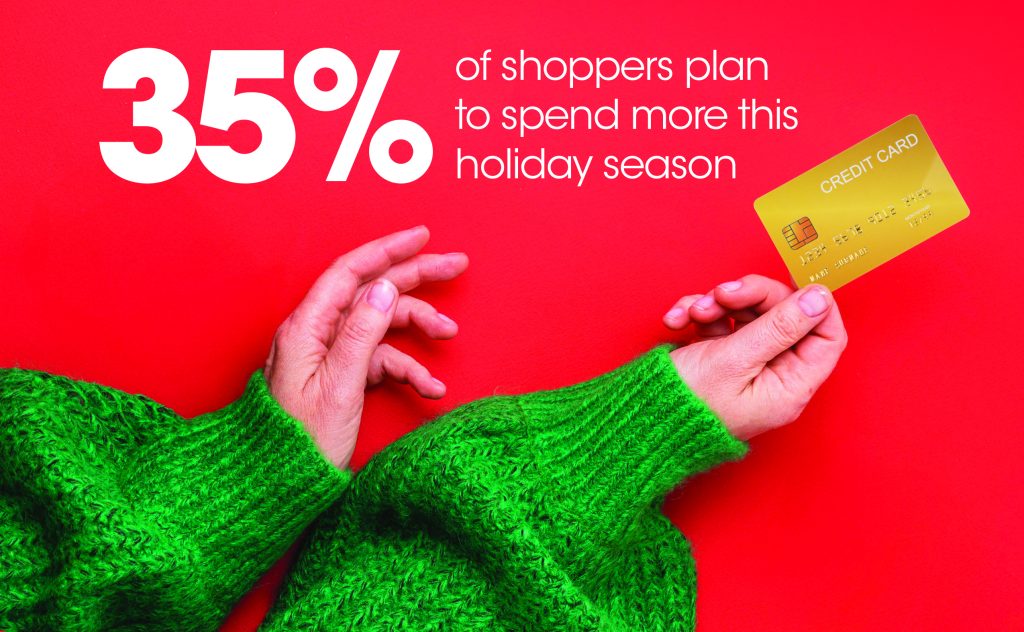
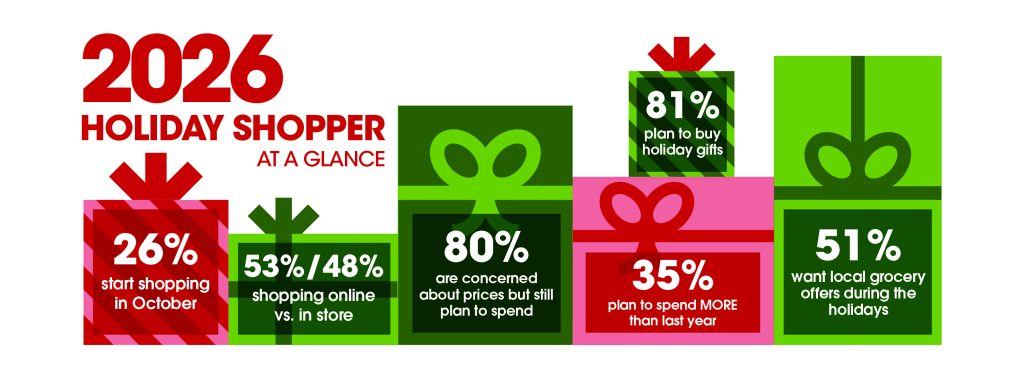
The short answer: Holiday shoppers in 2026 are more willing to spend than national forecasts suggest. In a new Valpak Clipp survey conducted with PureSpectrum, 35% of consumers plan to spend more than last year, and another 40% plan to spend about the same. That holds even though 80% are worried about rising prices. They’re starting early, with 41% beginning in September or October. They’re shopping every channel, and they respond to offers that show real dollars saved.
Every fall brings the same forecast: nervous shoppers, shrinking budgets, a cautious season. This year the national data leans that way too. Deloitte’s most recent holiday retail survey found consumers planning to cut spending 10% year over year, the least optimistic reading in the survey’s 40-year history.
Our survey found a different shopper, one who is anxious about prices but still committed to the season. The rest of this post covers what that shopper looks like and how to market to them.
Are consumers spending more this holiday season?
More than a third are.
On gifts alone, 26% expect to spend $250–$499 and 18% expect $500–$749.
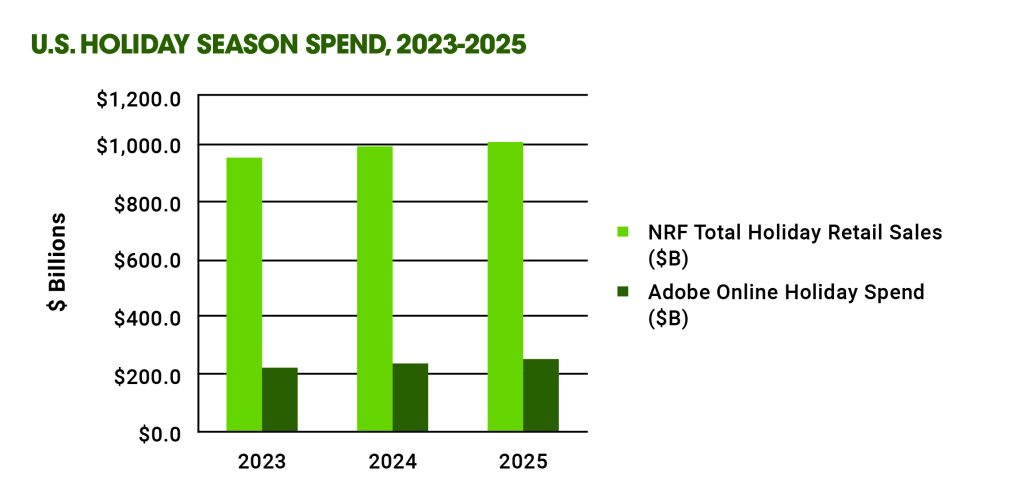
The broader market supports that resilience. The National Retail Federation reports 2025 holiday retail sales topped $1 trillion for the first time, up 4.1% over 2024. Adobe Analytics tracked a record $257.8 billion in online holiday spending between November 1 and December 31, 2025, up 6.8%. NRF’s 2026 forecast calls for 4.4% retail sales growth, ahead of the 10-year average of 3.6%.
Worry about prices and plans to spend more can look like a contradiction, but they’re really two steps in one decision. Shoppers have already decided the holidays are worth spending on. Now they’re deciding how to spend without feeling they overpaid. So price concern doesn’t signal a pullback. It signals that shoppers will look closely at every offer.
When do holiday shoppers start shopping?
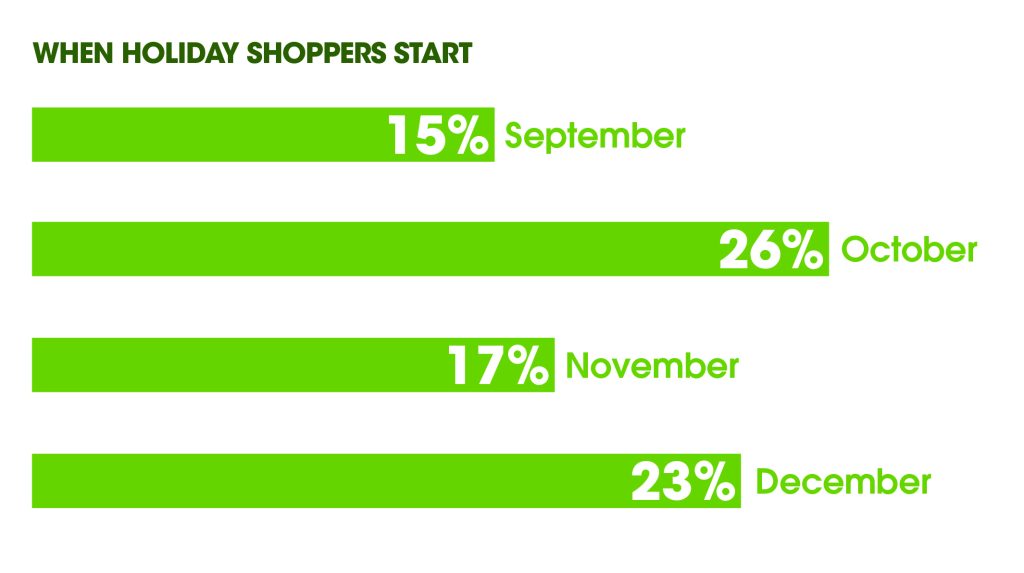
Earlier than most marketing calendars assume. October is the single biggest starting month, with 26% of shoppers beginning then, and another 15% start in September. That means about four in ten shoppers are already working through their lists before November.
Black Friday (66%) and Cyber Monday (48%) are still the two biggest shopping days of the season. But when the Black Friday circulars land, many households have already made a good share of their purchase decisions. A campaign that launches Thanksgiving week reaches shoppers after many of them have started.
The season is also close to universal. 88% of shoppers plan to celebrate Thanksgiving, 87% Christmas and 74% New Year’s, and 81% plan to buy gifts.
What are holiday shoppers buying, and where?
Shoppers aren’t picking between online and in-store. They use both. The purchase split is nearly even, with 53% online and 48% in-store. The top destinations are mass retailers (64%), online marketplaces (61%) and department stores (44%).
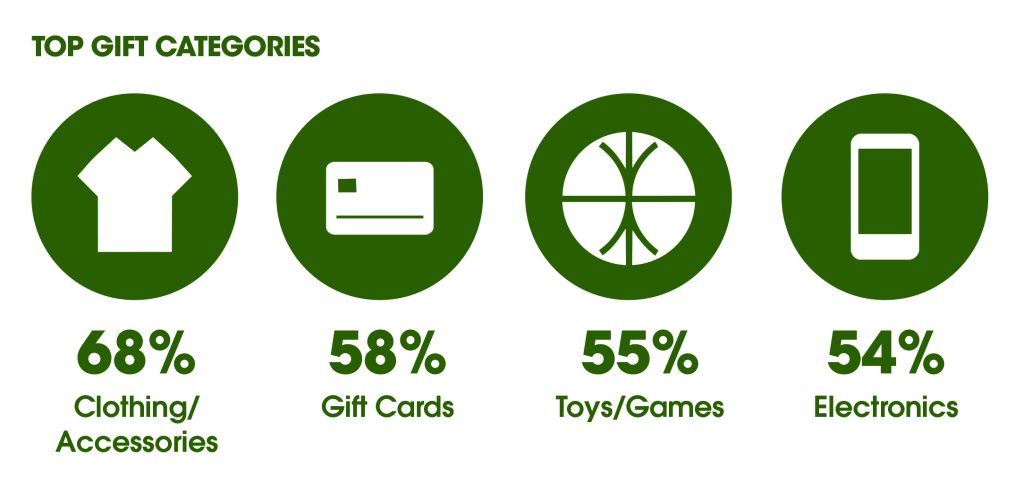
Gift cards ranking second says a lot about the mood this year. When 80% of shoppers are worried about prices, a gift card lets the recipient choose and spares the giver a wrong guess. The strong lead for mass retailers points the same way: shoppers are choosing convenience and the one-stop trip, even in a season built around thoughtful gifts.
How are shoppers managing higher prices?
Deal-seeking used to describe a segment of shoppers. Now it describes almost everyone. The most common money-saving tactics this season are:
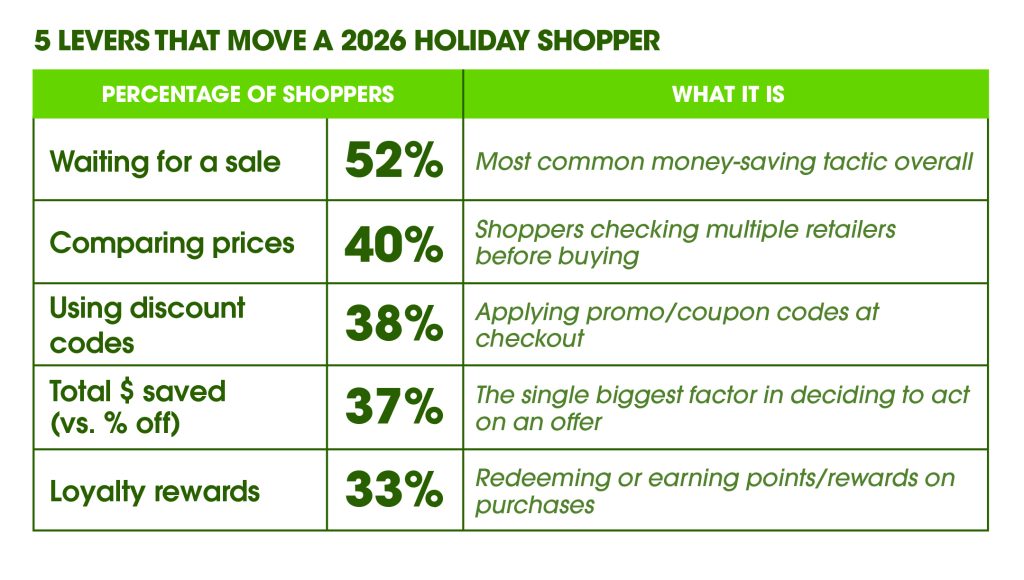
Shoppers are also changing their behavior. 37% are cutting spending on themselves, 35% are comparing prices more, 34% are looking for more discounts, and 32% are shopping earlier.
When a product is close to a commodity, the offer often decides the sale.
Which holiday offers work best in 2026?
Buy-one-get-one-free leads at 36%, followed by free or discounted shipping (28%) and percentage-off discounts (26%).
The more useful finding is about what gets a shopper to act. Total dollar amount saved (37%) beats percentage off (32%) and convenience (28%). Shoppers have learned to do the math. A 30% discount on a $20 item loses to 15% off a $300 purchase, because the second one saves real money. Offers that lead with the dollars a shopper keeps, rather than the biggest percentage you can print, are the more honest pitch and, increasingly, the more effective one.
Where do shoppers find holiday deals?
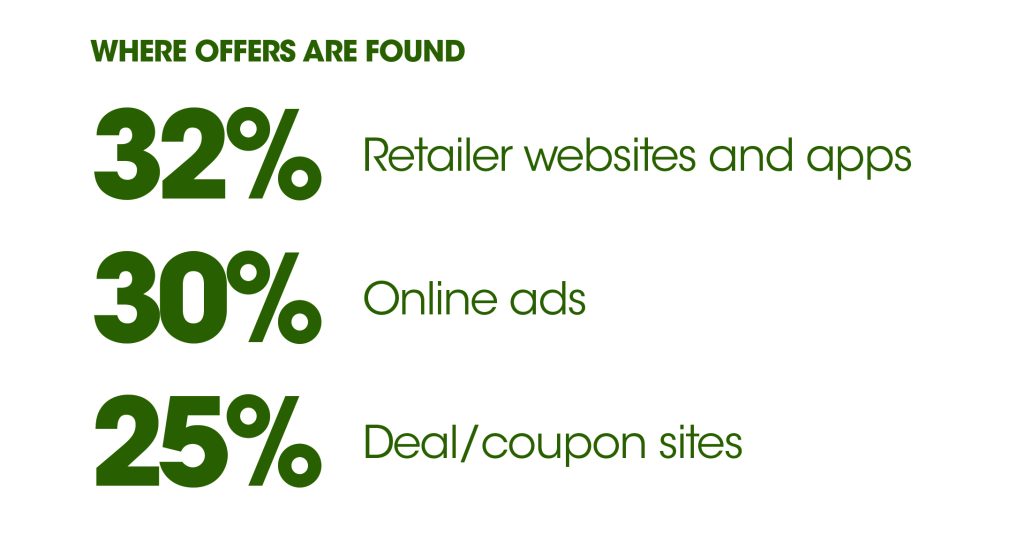
Shoppers discover offers mainly through retailer websites and apps (32%), online ads (30%) and deal or coupon sites (25%). Discovery and action are different steps, though. Friends, family and retailer sites are more likely than ads to get someone to buy.
AI tools matter less this season than the industry buzz suggests. Only 16% of shoppers expect to use them, and that group uses them for practical tasks: finding prices and offers (71%), gift ideas (61%) and comparing products (56%). Shoppers use AI to check a price, not to make the decision. Word of mouth and retailer relationships still carry more weight.
The holiday opportunity most brands overlook: the gathering
Most holiday marketing is built around the moment a gift is given. Much less is built around the meal, the party and the table, even though those take up a big part of the season.
38% of shoppers plan to host a holiday gathering this year. Most hosts expect to spend $100–$249 (36%) or $250–$499 (35%) on food and entertaining. The dinner-table offers with the most pull are family meal bundles (33%) and buy-one-entrée-get-one-free (31%).
Local demand is clear. Grocery stores are the most-wanted source of local holiday offers at 51%, followed by restaurants and catering (43%) and bakeries (32%). Shoppers choose local businesses mainly for a convenient location (36%), compelling offers (35%) and unique gifts (31%).
The demand is there, but few advertisers are treating grocery and hospitality as a holiday category. For local businesses and the national brands sold in grocery, this is one of the clearest openings of the season.
What this means for your 2026 holiday marketing plan
Start early. About four in ten shoppers start before November. A campaign that waits for Black Friday week arrives after many of them have started.
Lead with dollars saved. Shoppers are already doing the math, so put the number they’ll keep front and center.
Treat food and gatherings as a holiday category. Grocery, restaurants and bakeries face real demand and little competition for it.
Frequently asked questions
Are consumers spending more on the holidays in 2026? Many are. In Valpak Clipp’s 2026 holiday survey, 35% of shoppers plan to spend more than last year and 40% plan to spend about the same. Only 22% plan to spend less.
When do most people start holiday shopping? October is the most common starting month, at 26%. Another 15% of shoppers start in September, so about four in ten begin before November.
What are the most popular holiday gifts in 2026? Clothing and accessories lead at 68%, followed by gift cards (58%), toys and games (55%) and electronics (54%).
What holiday promotions do shoppers respond to most? Buy-one-get-one-free offers rank highest at 36%. When deciding whether to act on an offer, shoppers weigh total dollars saved (37%) more heavily than percentage off (32%).
Are shoppers using AI for holiday shopping? Only 16% expect to. Those who do mostly use AI to find prices and offers, get gift ideas and compare products.
Where do holiday shoppers want local deals? Grocery stores top the list at 51%, followed by restaurants and catering (43%) and bakeries (32%).
Methodology
This report draws primarily on the 2026 PureSpectrum Holiday Survey, conducted by Valpak Clipp and market research firm PureSpectrum. Supplemental market data comes from the National Retail Federation, Adobe Analytics, Deloitte’s Holiday Retail Survey and the ANA/DMA Response Rate Report