If you’re one of the 36.2 million small businesses in the U.S., you already know marketing is a perpetual uphill climb. Generating quality leads is hard enough. Converting those leads into paying customers is harder still.
Radio advertising has been around since 1922. It’s had a good run, over a century of jingles, drive-time spots and “call now” offers. But as audiences keep splintering across streaming, podcasts and social media, radio’s share of the advertising dollar keeps shrinking. So what does that mean for your marketing budget in 2026? The numbers tell a pretty clear story.
Radio Advertising Statistics
Radio’s total ad revenue has been sliding for two decades. Back in 2005, the industry pulled in about $21.5 billion. By 2016, that had dropped to roughly $17.4 billion. Today, industry watchers estimate total U.S. commercial radio revenue sits closer to $9.4 billion, with digital sales now making up about a quarter of that total.
That digital piece is really the only bright spot. Radio’s digital advertising revenue (streaming, podcasts, station websites and apps) hit a record $2.3 billion in 2025, growing at a compound rate of roughly 8% a year since 2022. Meanwhile, core over-the-air advertising has kept declining at about 2% a year over that same stretch. Local radio, including its digital assets, is projected to bring in around $12.3 to $12.9 billion in 2025, according to BIA Advisory Services, but even that figure leans more and more on digital products to stay flat.
The pattern is clear: radio isn’t going away, but the traditional 30-second spot is doing less of the heavy lifting every year, and stations know it. Increasingly, they’re selling advertisers on streaming and digital bundles just to keep revenue from sliding further.
Radio Advertising Costs
Radio sells ads in 15, 30 or 60 second spots, plus mentions, sponsorships and other add-ons stations like to bundle in.
Producing a single radio spot with professional voice talent, scripting and studio time typically runs somewhere between $300 and $1,200 for a small business, more if you want custom music or multiple voices. Airtime costs vary enormously by market. As a rough guide heading into 2026:
- Small markets: roughly $25–$100 per 30-second spot
- Mid-sized markets: roughly $100–$500 per spot
- Major metros during peak drive time: $500–$5,000+ per spot
Running a meaningful weekly schedule (about 19 spots a week, the rough equivalent of the old benchmark) typically costs anywhere from $900 a week in a smaller market to $5,000 or more in a major metro, before production.
Let’s put that in real terms. Say you own a pizza restaurant in a mid-sized market and you’re spending roughly $3,600 a month on radio. If 50 people call in response, your cost per lead is $72. Is your average order $72?
With Valpak direct mail, your cost can run just a few cents per household. For a pizza restaurant, we typically recommend mailing around 30,000 targeted homes near your location. Even at a few cents per household, that’s a fraction of a month of radio airtime, and every household on that list was chosen because they’re a good match for your business, not because they happen to be in a station’s broadcast radius.
Radio Advertising Audience
Radio still reaches a lot of people. According to Nielsen’s Audio Today 2026 report, AM/FM radio reaches about 93% of U.S. adults monthly, roughly 242 million people, including 89% of adults 18-34. That reach is real, and radio still edges out platforms like smartphone apps, connected TV and computers on a pure reach basis.
But reach isn’t the same as attention. Most adults listen to local AM/FM during their commute, which is also priced at a premium because of it. And the “sweet spot” advertiser demographic is still generally 25-54, though the right target audience obviously depends on what you’re selling and which station format fits your customer.
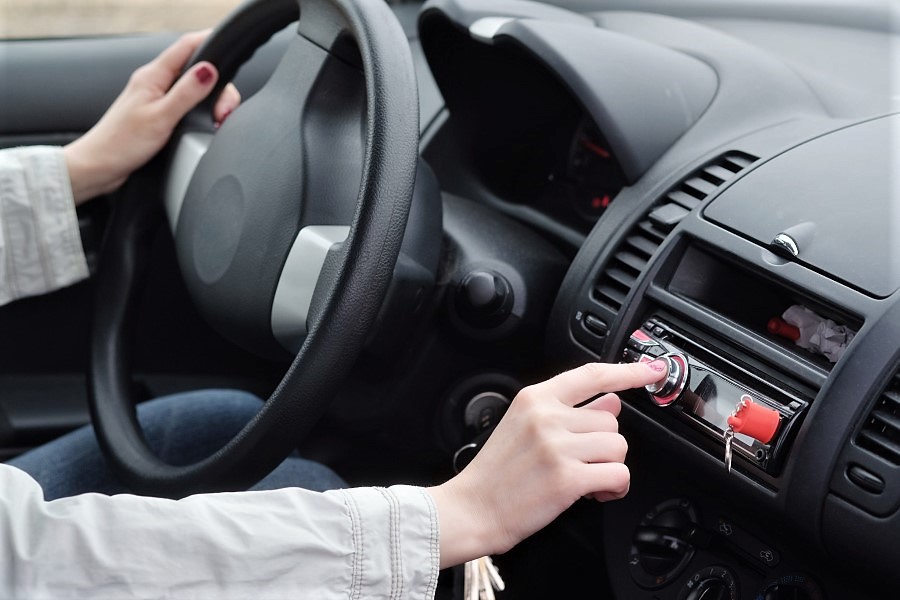
Here’s the catch that hasn’t changed since radio’s early days: there’s no guarantee who’s actually listening when your spot airs, or how engaged they are with it. Someone driving to work is watching traffic, not memorizing your phone number. If they’re interested, they’re not pulling over to write anything down. They’re relying on memory later, and hoping they don’t mix up your business with a competitor’s.
Advertising with Valpak works differently. Your ad lands in a customer’s hands, at their front door, and it stays there. There’s no “prime time” that makes one day of mail more valuable, or less seen, than another.
Direct Mail Advertising Reach
If you think people don’t read physical mail anymore, the research says otherwise. According to USPS-cited research, 82% of millennials say they trust print advertising more than digital ads, and younger generations are actually some of the most receptive to mail, not the least. Nielsen and USPS research consistently find that direct mail’s tactile, no-login, no-notification format cuts through in a way overloaded inboxes and ad-blocked feeds can’t.
There’s also the simple habit of it. Getting your Blue Envelope every month has become part of a lot of households’ routine. People genuinely look forward to opening it, because they know it means valuable, local coupons are inside.
Valpak’s direct mail advertising reaches millions of households based on criteria you choose, not a station’s signal range. Whether you sell pizza or windows, your ad only goes to the households most likely to actually use it, for cents per household. That’s a level of targeting radio simply can’t match; a broadcast signal doesn’t know or care whether the listener lives down the street or an hour away.
Direct Mail Audience Targeting
Households on Valpak’s mailing list tend to have meaningfully higher household incomes and home values than the national average, and a large majority are homeowners rather than renters, based on Valpak’s own Claritas-sourced audience data. That same data shows Valpak’s audience over-indexes on spending across categories like auto repair, restaurants, home improvement, retail and beauty services, compared to the average U.S. consumer.
Whether you run a home improvement business or an upscale salon, your ad only reaches households genuinely likely to spend money with you. Valpak includes creative design and ROI performance tracking as part of every campaign, so you’re not paying extra to know what’s working.
Direct Mail Design Best Practices
Visual, scannable design still wins. About 65% of people are considered visual learners, more likely to remember an ad they can see than one they only hear once and never again. Radio, by definition, can’t do that. A well-designed mail piece can.
If design isn’t your thing, that’s fine. Valpak’s creative team builds your ad using a lean, tested design approach, so you get something visually strong, on-brand and backed by performance data you can actually track from lead to close.
Direct Mail Increases Marketing ROI
Maybe you already have a marketing plan, even an in-house team running it. But if you’re blowing past budget or missing your own targets, the problem usually isn’t effort. It’s strategy.
The data backs direct mail as one of the strongest-performing channels available today. According to the ANA/DMA Response Rate Report, direct mail averages a 4.4% response rate against just 0.12% for email, roughly 36 times higher. House lists of existing customers often perform even better, in the 5-9% range. Direct mail to house lists has also been associated with some of the strongest ROI of any paid marketing channel, with industry estimates putting average direct mail ROI around 161%.
Pairing direct mail with digital advertising increases engagement even further. Instead of reaching a customer through a single channel, you’re showing up in more than one place they already pay attention to. And unlike a radio spot playing in the background while someone focuses on traffic, a piece of mail demands a moment of actual, undivided attention.
Direct mail works because it earns trust the way digital ads increasingly struggle to. For more than 50 years, Valpak has helped small businesses reach the customers most likely to become loyal ones. If you’re ready to build a marketing strategy that’s easier to plan, track and prove, contact Valpak today.
Sources
- Radio Ink / Radio World, coverage of RAB’s 14th Annual Digital Benchmarking Report (Borrell Associates), February 2026
- BIA Advisory Services / Radio Advertising Bureau (RAB), U.S. Local Advertising Forecast, 2025
- Nielsen, “Audio Today 2026: How America Listens,” March 2026
- U.S. Small Business Administration, Office of Advocacy, Frequently Asked Questions About Small Business, 2026
- Association of National Advertisers (ANA) / DMA Response Rate Report, 2025 edition
- Modern Postcard, “Direct Mail 2025 Statistics: Trends and Insights,” citing ANA and USPS research